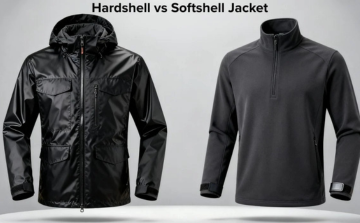

Choosing between a hardshell and a softshell jacket comes down to one main question: are you preparing for the worst the weather can throw at you, or do you need a versatile layer for staying active and comfortable in cooler conditions? Here’s how they compare.
The Quick Answer
- Choose a hardshell if you need maximum, reliable protection from heavy rain, snow, and strong winds. It is your ultimate shield for harsh, wet, and unpredictable weather.
- Choose a softshell if you prioritize comfort, breathability, and freedom of movement for high-energy activities in dry or mildly wet conditions. It’s the versatile all-rounder for cool, changeable days.
Hardshell Jackets: The Ultimate Weather Shield
A hardshell jacket is your first line of defense against the elements. Built to withstand the kind of weather that sends most people indoors, it is a non-negotiable piece of gear for mountaineering, skiing, and hiking in exposed or wet environments.
What Makes a Hardshell Jacket?
The key to a hardshell’s performance is its construction. It features a waterproof and breathable membrane (like GORE-TEX) sandwiched between an abrasion-resistant outer layer and a protective inner lining. The outer fabric is also treated with a DWR (Durable Water Repellent) coating to make water bead up and roll off .
This layered construction results in a jacket that is 100% windproof and fully waterproof, keeping you dry even in relentless rain or snow. All seams are sealed and zippers are waterproof to guarantee complete protection . In addition to weather protection, hardshells are durable and highly abrasion-resistant, capable of withstanding the friction of backpack straps or contact with rock .
The Trade-offs
Because their primary goal is protection, hardshells are not perfect. They feel stiffer and less stretchy than softshells and can be noisy (“rustle”) when you move . More importantly, their breathability is limited compared to softshells. While the membrane allows sweat vapor to escape, intense activity can still lead to a clammy feeling inside .
Hardshells are typically uninsulated, so they don’t provide warmth on their own. You must layer a fleece or puffy jacket underneath for insulation .
When to Wear a Hardshell:
- In heavy rain, sleet, or snowstorms.
- On exposed, windy mountain ridges.
- For low-to-moderate intensity activities where staying dry is the priority.
- When you need a rugged, protective outer layer.
Softshell Jackets: The Versatile All-Rounder
Softshell jackets are the Swiss Army knife of the outdoors. They are designed for comfort, freedom of movement, and breathability, making them the ideal choice for active pursuits in cool, dry, or mildly damp weather .
What Makes a Softshell Jacket?
Softshells are built from a mix of flexible, stretchy materials (often with elastane) that provide a soft, comfortable feel against the skin . They typically feature a three-layer construction: a durable, water-repellent outer shell, a breathable membrane or tightly woven middle layer, and a soft, fleecy inner liner for warmth .
While they lack a fully waterproof membrane, softshells offer a unique combination of benefits. They are highly breathable, wicking away sweat and regulating temperature during strenuous climbs . They also provide excellent wind resistance and feature a soft, stretchy fabric that allows a full range of motion without restriction . Many softshells also have a fleece lining, making them significantly warmer than an uninsulated hardshell .
The Trade-offs
The compromise for all that comfort and breathability is weather resistance. Softshells are generally water-resistant, not waterproof. While they can handle light rain or drizzle, they will eventually wet out in a sustained downpour . They are best used when you don’t need full, all-day foul-weather protection.
When to Wear a Softshell:
- For high-output activities like ski touring, trail running, or hiking uphill.
- In cool, dry, or overcast weather with only a chance of light showers.
- As a comfortable outer layer for mild spring or autumn days.
- As an insulating midlayer under a hardshell on extremely cold days .
Hardshell vs Softshell: A Comparison
The Final Verdict
The “right” jacket is the one that best matches your planned activity and the conditions you expect to face.
If you are heading out for a long expedition in a region known for unpredictable, wet weather, a hardshell is your indispensable safety net. It’s the gear you trust to keep you dry when the forecast fails.
If your focus is on high-energy adventures like backcountry touring or trail running in cool, drier climates, a softshell is likely your best bet. It breathes with you, moves with you, and provides enough protection for all but the most severe weather, often allowing you to leave the crinkly, less breathable hardshell at home.
For many outdoor enthusiasts, having both in your closet is the ultimate solution, allowing you to build the perfect layering system for any adventure
